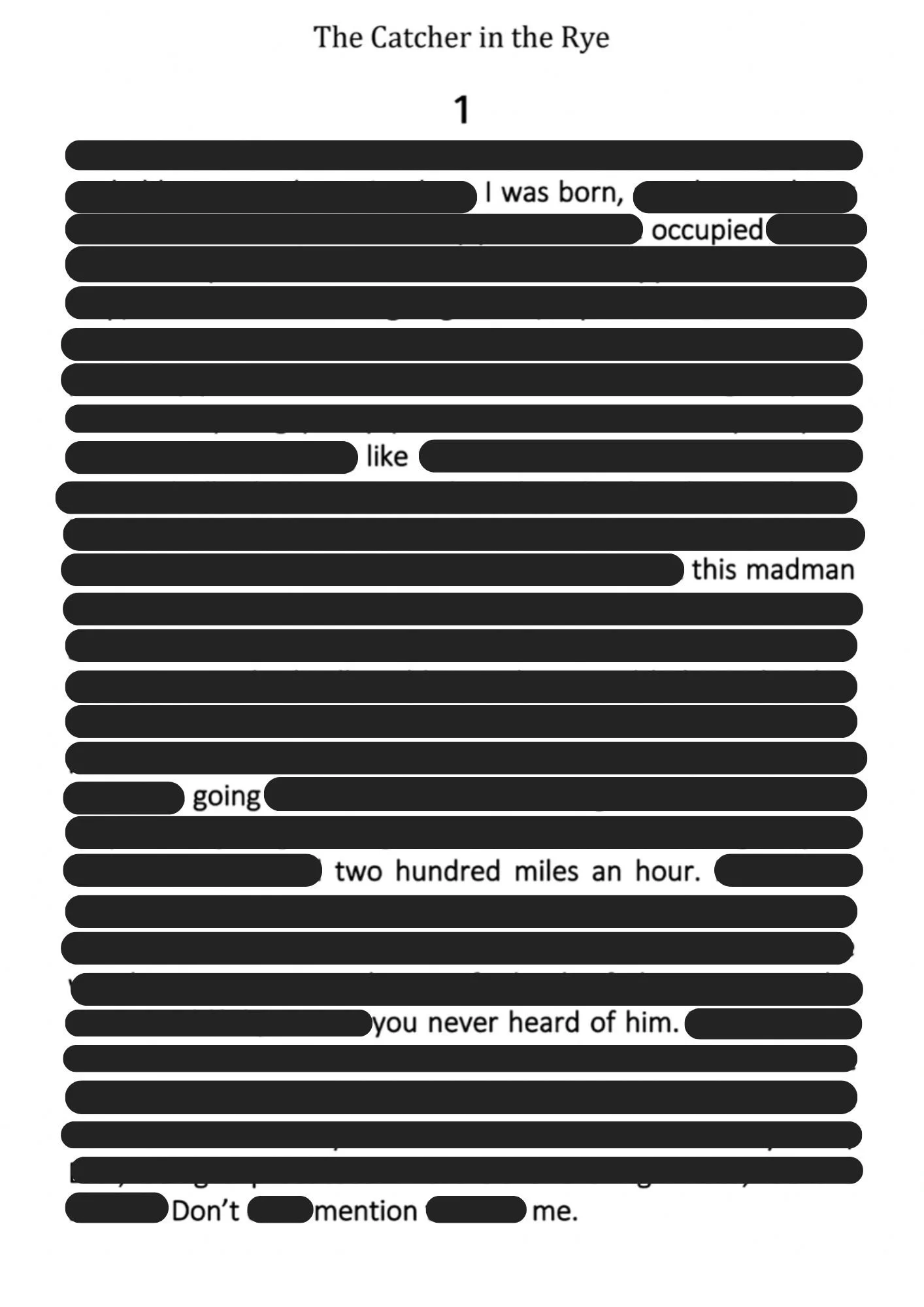
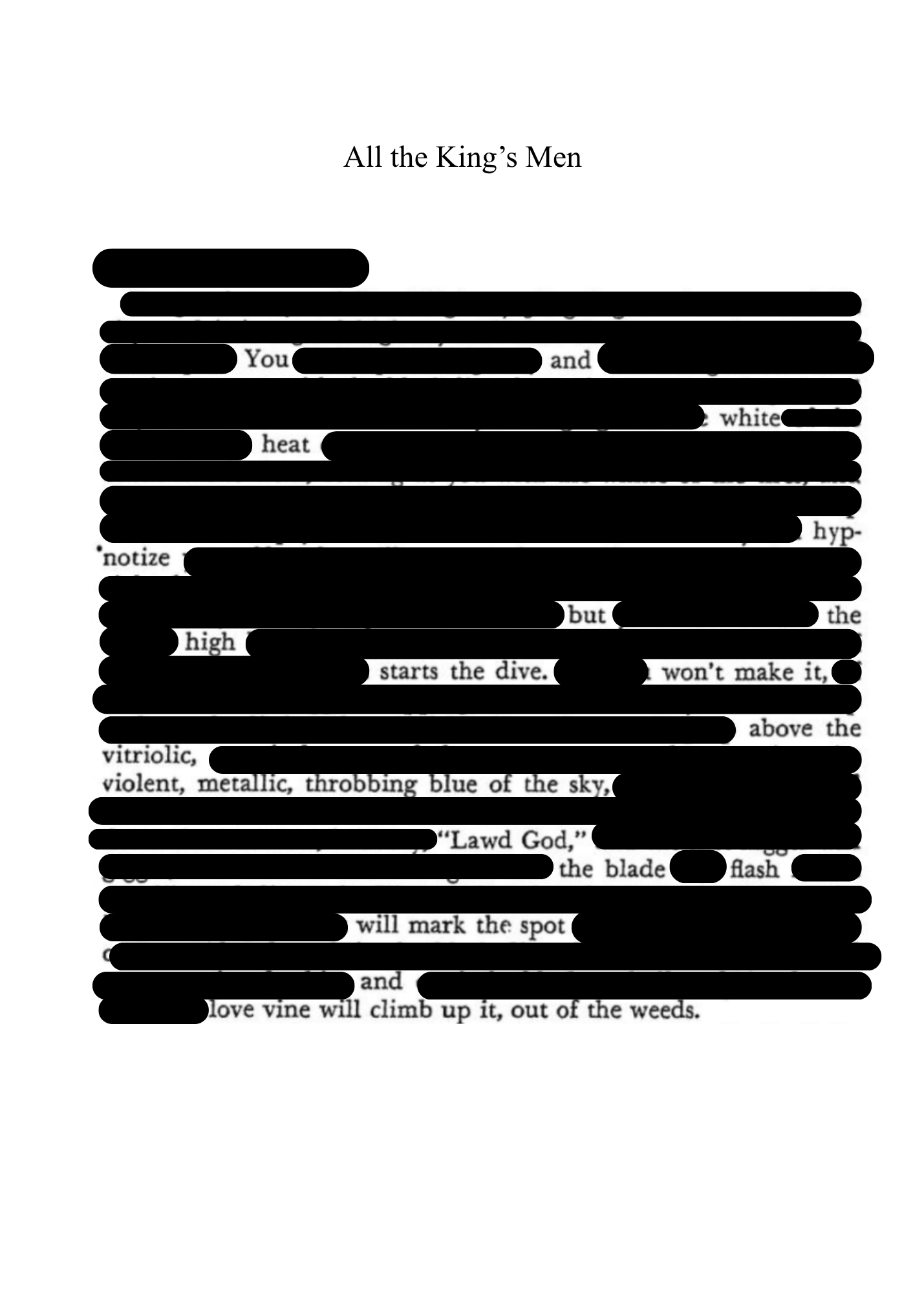
Erasure poetry, or blackout poetry, is a poetic form in which a poet erases, crosses out, removes, cuts out, covers, retypes, or blacks out words from preexisting writing to create something new.
“The Rule”: The surviving words must stay in their original order on the page. You cannot rearrange them like in a traditional collage.
A Brief History of Erasure
Sappho’s Fragments from the 7th Century BCE
Dorris Cross’s “Found Words” or “Dictionary Columns” series (1920)
Tom Philips’s Humument, based on an obscure 1892 Victorian novel, The Human Document (1970)
Ronald Johnson’s Radi Os based on Paradise Lost by John Milton
Evolution and Political Reclamation
Jen Bervin’s Nets using Shakespeare’s sonnets (2003)
Travis Macdonald’s The O Mission Repo from the 9/11 Commission Report (2008)