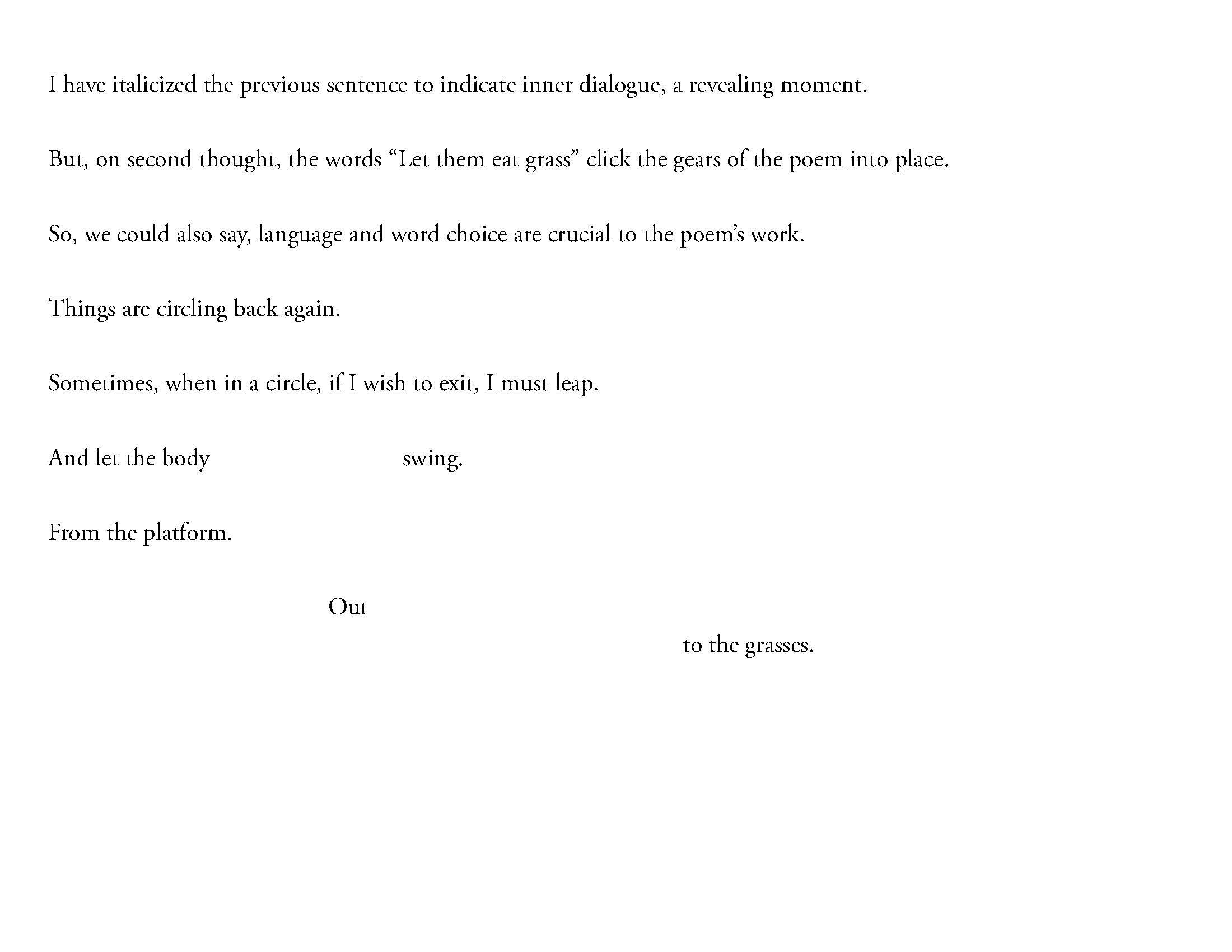
Layli Long Soldier’s Whereas, a collection of poetry that makes known the systemic violence against and cultural erasure of native tribes in the United States. In doing so, Long Soldier dismantles the language that has long justified and euphemized the violent actions perpetrated by the US government through restrictive legislation, broken treaties, and formal apologies, as well as its cultural “threat // of re- // ductive // [thinking].” Through her extended meditations and volatile forms, Long Soldier gestures at the divide possible and, in some cases, devastatingly realized between what’s said, what’s meant, and what’s enacted even today against native peoples by this oppressive and colonizing institution. The book is divided into two distinct parts that, in their arc, mimic the progression of a legislative argument—from Part I, “These Being the Concerns,” made up of personal and historical lyrics that establish the speaker’s motivations for and the urgency of this argument, to Part II, “Whereas,” a long poem that investigates how a complex peoplehood, its autonomous cultures, and its communities’ diverse socioeconomic challenges are misrepresented and simplified in American history and popular imagination.The first and larger half of Layli Long Soldier’s WHEREAS is made up of seventeen individual poems, the second is one long poem titled “Whereas,” which responds to President Obama’s 2009 congressional resolution of apology to Native Americans. Throughout the book Long Soldier addresses the struggle of coming of age as a member of the Oglala Sioux tribe in America. Some of the poems experiment with language, while others tell stories—the speaker being teased with schoolyard “warcry” taunts or being shocked by a woman’s admission that she hadn’t imagined Natives could feel.